
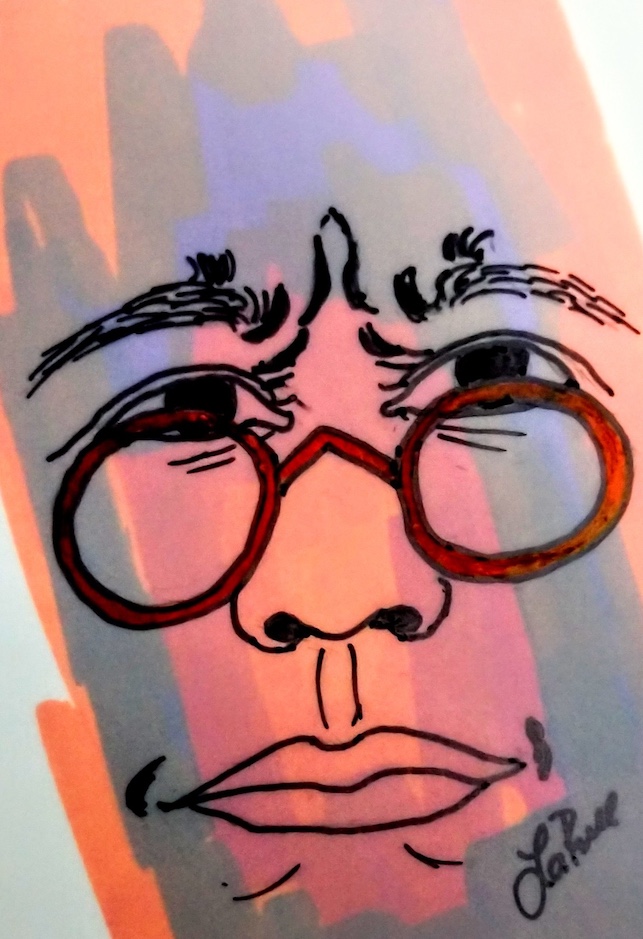
Christine “Liz” Larue has been writing for Garden Spices Magazine for several years. Her column, Life Pondering, shares her memories, experiences, and insights as an artist living in Chicago.
Her social media posts are so meaningful that I wanted to showcase her work. So, until she finds a permanent place for it, her words can be found here with Spicy.
The Weight of the World
December 23, 2025
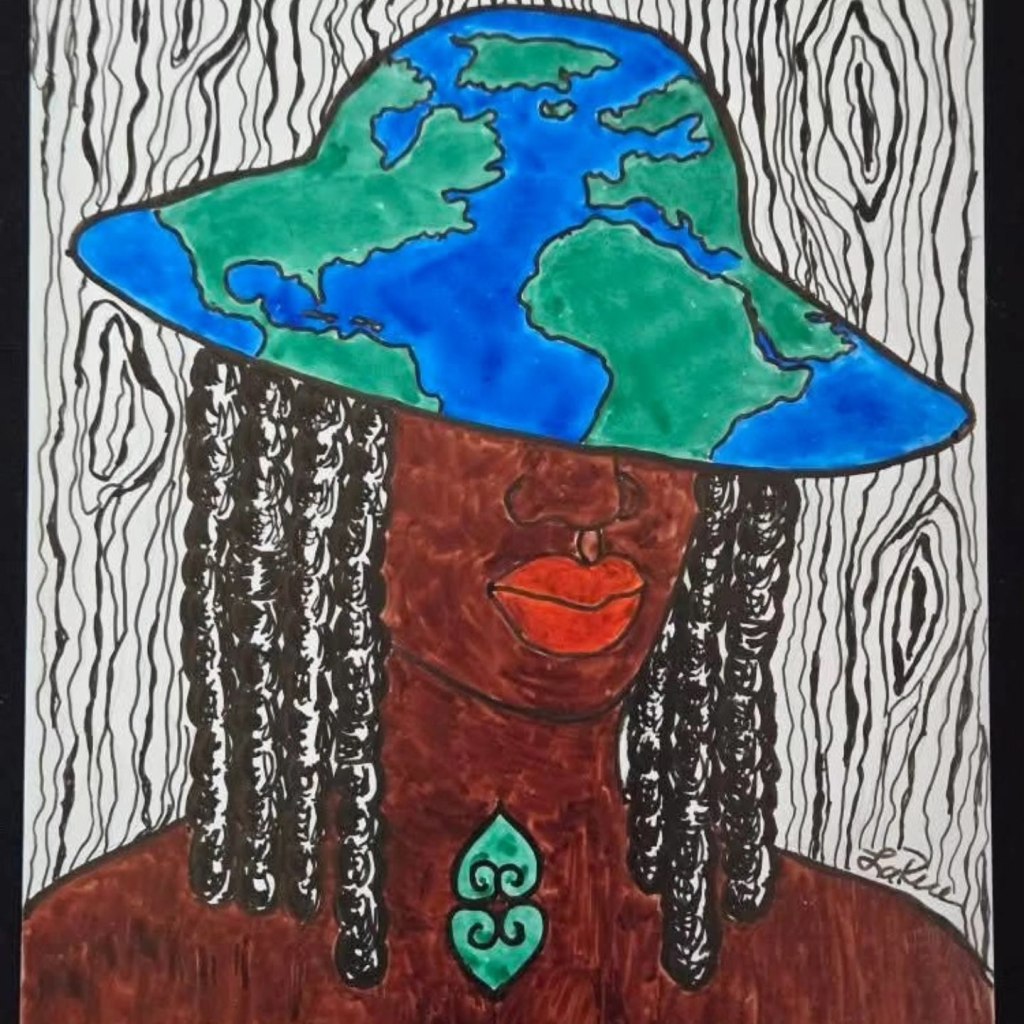
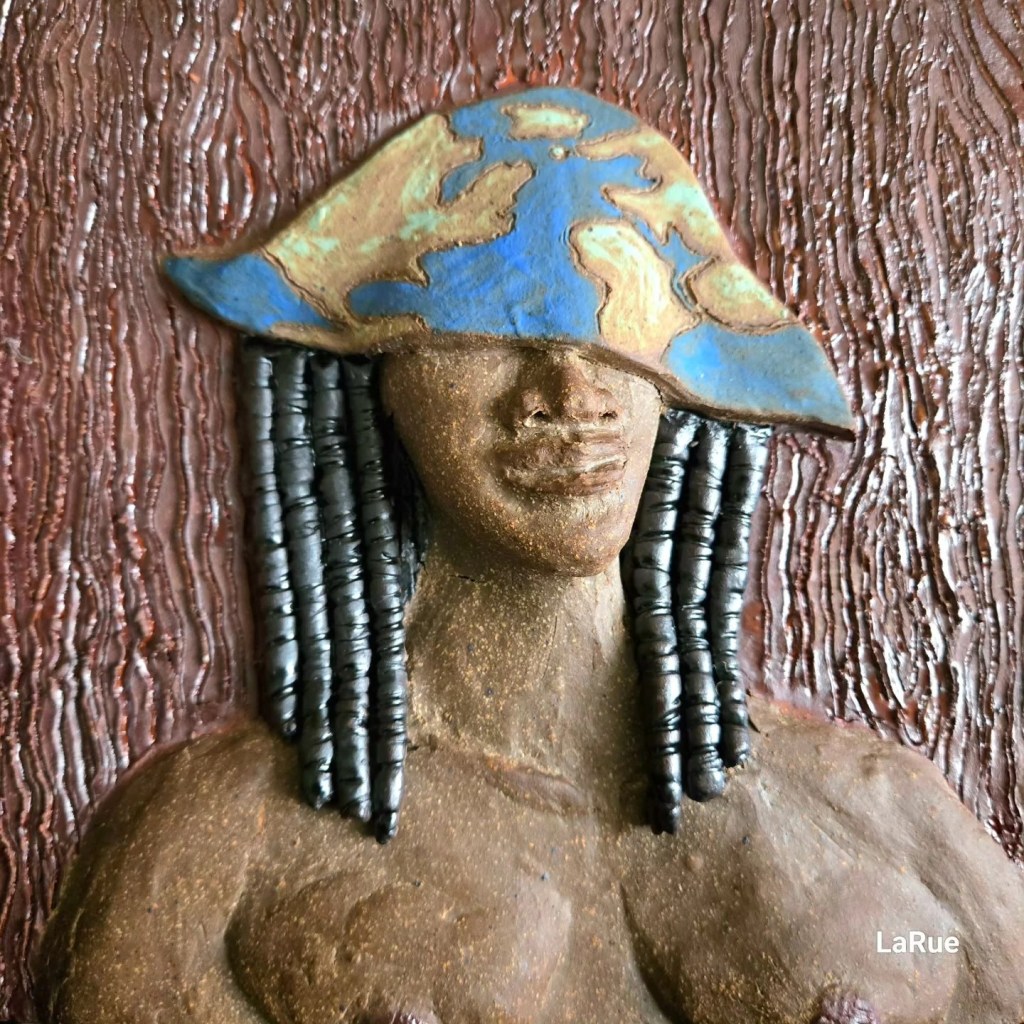
In my studies, since the 14th century, the Black woman has been taken on a forced “world tour” without a tourist card and without any of the benefits. From the Sub-Saharan and Arab slave trades to the Trans-Atlantic crossing, she has been a worldwide traveler not by choice, but by circumstance, and frequently by force. Though she is often the most maligned woman on the face of the Earth, she remains the engine of global history. Black women face the double bind between racism and misogynoir…damned by Europeans for the color of her skin and her gender, yet coveted for both, but not for her benefit.
The Imagery and the Grounding of the Wood. In this work, the globe sits heavy upon her brow—a map of forced displacement that she wears like a crown she never asked for. Behind her, the deep grooves of the background mimic the grain of ancient African hardwoods, like Ebony, Wenge, Zebrawood. In African life, trees are the ultimate symbol of grounding and spiritual connection; they bridge the gap between the heavens and the earth, reaching deep into the soil to hold onto the ancestors while their branches touch the sky. This wood design signifies that, even as she is moved across the globe, she remains rooted in an unshakable foundation of life.
The Symbolism
At the center of her throat, where her voice resides, sits the Adinkra symbol Asase Ye Duru. Meaning “the Earth has weight,” this symbol represents the providence and divinity of Mother Earth. It is placed intentionally at the voice box to speak for those silenced by centuries of forced labor—a struggle that began in the 1400s and continues in many states today.
The Message
This piece is a tribute to the “invisible” traveler. It acknowledges that while the Black woman was moved to build the world, she is finally reclaiming her own itinerary. Her power, like the Earth and the continent’s deep-rooted trees, is ancient, heavy, and eternal.
Larueshandinclay #blackceramicists #blackwomanartist #ceramicartistofinstagram #peopleofcolorpeopleofclay
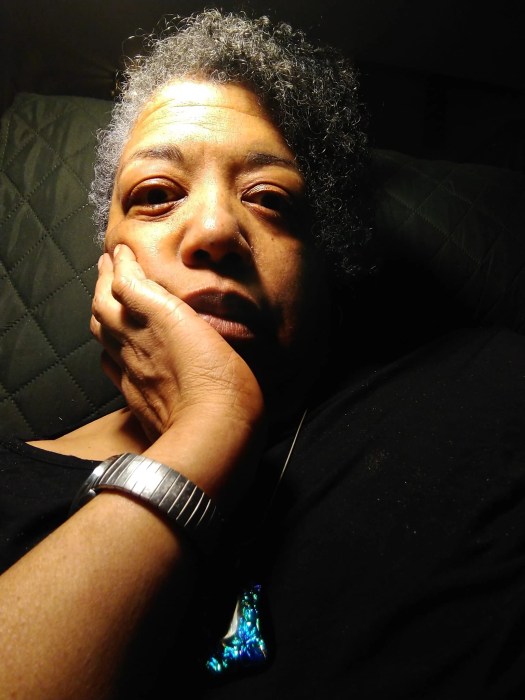
Artist Bio
Christine “Liz” LaRue is a clay artist and illustrationist. She is known for her intricately textured figurative sculptures and emotionally illustrative drawings. Chicago-born though also raised in Utah and Idaho, Ms. LaRue is of Creole/Cuban descent. Her art has been influenced by her Afro-Latino heritage. Ms. LaRue’s interests have been in pre-Columbian art of the Olmec, Maya of Mexico, Nazca, and Moche face pots of Peru. This also includes the bronze sculptures of the Ife of Nigeria and Tā Moko tattoo art of the Maōri.
HORSES
November 2 at 4:34 AM
·
I’m missing my father. His heavenly birthday is coming up in a couple of weeks. This is a favorite photo my father got done especially for me. I’m sure he had someone shoot the photo for him cuz he had difficulty remembering how to use the camera on his cell phone.
Someone in our neighborhood was having a Western Day complete with horses and baby farm animals. Dad had on his favorite “Pocatello, Idaho” cap of his hometown. He struck up a conversation with the exhibition owner and got this photo taken.
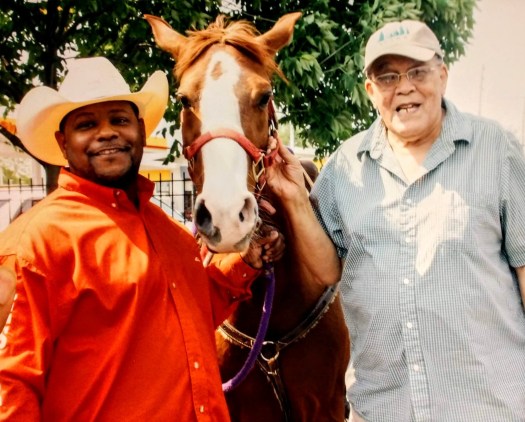
t was in homage to my learning how to ride my first horse at the age of 6, even with my leg braces, at a Chicago stable in the heart of the Woodlawn community. Rich whites stabled their horses 🐎 there to enable them to ride through Jackson and Washington Parks. In the 1940s through the 1970s, it was not unusual to see people riding horses through Chicago’s stretch of park systems along the lakefront. We even had a racetrack on Washington Park on the Southside, which is now a field house with a pool. Though it took a while for the city to let us Black folks IN that pool, even though the neighborhood was 99% Black.
In looking back on that horseback riding thing, it was highly unusual to allow a child with leg braces to learn to ride. That didn’t become a thing to do medically for handicapped kids until the 1980s, recognized as physical therapy. My parents were avid bearers of Western culture, being from Idaho and Utah. They were so gung-ho about it, they didn’t care that Chicago Black folks viewed this as “odd duck” behavior. Mom even celebrated Utah’s “Pioneer Day” while living in Chicago.
The high school I attended on the far North Side even had an equestrian club. You know I joined! I rode horses every Tuesday at a stable waaaaay out near our main airport for 4 years. Dad would pick me up late in the evening once back in our high school’s neighborhood. He would make me sit in the back seat cuz of course, I smelled like horses. He often gave rides home to other “rarebird” buddies, like my high school buddy Wanda Flagg!
Dad recounted a story about our family’s trips to the Wisconsin Dells many summers. One day, I spied a stable in Wisconsin and pleaded to go horseback riding. I was 7, still in leg braces. Of course, the folks agreed. But one of my parents had to go with me for supervision.
My folks drew straws, and Dad got the short straw; he wasn’t personally thrilled about that. He said the ranch hands put me atop the biggest horse he had ever seen in his life! As he mounted his own horse, a much smaller one, the group prepared to ride through the thick forests of the Dells. Dad said as soon as I got my stirrups set up, the ranch hands gave me the reins, and Dad said I took off on a gallop following the lead trail guide. Dad said he was stunned! He wasn’t sure he could keep up with his own 7-year-old as he could barely get his horse into a fast, jarring trot!
Turned out I had a great time. Dad was sore from his ride and complained how I left him in the trail dust in my exuberance.
So decades later, he got this photo for me in memory of all those horse hijinks. When I saw the photo, we both cracked up. I asked, “Dad, did you get on the horse in this photo?”
He snorted. “Are you kidding? I hate horses. They smell!”
I was stunned. “But Dad, all those times you rode with me in the Wisconsin Dells?”
He snorted again. “I’m your father. It’s what fathers do…and at great sacrifice to their rear ends! And you outrode me every single time. That’s what I got from getting you horseback riding lessons.”
I rode all the way through college. So I see this photo and chuckle at the great sacrifice my father made. I didn’t find out until this photo that Dad actually disliked horses. It was Mom who loved horses, but she always connived with Dad to ride. She just liked petting them and feeding them!
Sneaky mother!
Happy Heavenly Birthday, Dad!
Artist Bio
Christine “Liz” LaRue is a clay artist and illustrationist. She is known for her intricately textured figurative sculptures and emotionally illustrative drawings. Chicago-born though also raised in Utah and Idaho, Ms. LaRue is of Creole/Cuban descent. Her art has been influenced by her Afro-Latino heritage. Ms. LaRue’s interests have been in pre-Columbian art of the Olmec, Maya of Mexico, Nazca, and Moche face pots of Peru. This also includes the bronze sculptures of the Ife of Nigeria and Tā Moko tattoo art of the Maōri.
 Spicy...